Of Real Estate and Reconciliation

We spent New Years this year at a cottage and the weekend was filled with all manner of interesting conversation about issues that have preoccupied us in the past year.  One of those is truth and reconciliation in our relationship with indigenous people in Canada.  

In one of those conversations there was some reference to the value of real estate in the Haldimand tract “valued at billions of dollars”.  I think it was made in an effort to get at the magnitude of the injustice.  That comment got me thinking about the value of real estate, reconciliation, and how we make our way forward.  My concern is that the reference to the dollars skews the real value because, while dollars may be the way that we as settlers measure value, it is not how our indigenous brothers and sisters see land value.

I also think it’s misleading.  The truth is that it is settler development that created the dollar value (or even the concept of thinking of land value in dollars) and changed the land in a way that would be impossible to restore.  The land had value in a very different way for indigenous peoples.  Indigenous people did not consider themselves owners of the land.  Value was not measured in dollars but rather in terms of what the land was able to provide in food, spiritual wellness, and a sense of place.  We settlers could learn from that.  The settler influence, however, is not necessarily all bad.  Capitalism has created a lot of wealth and innovation and, as a result, a lot of influence in the rest of the world.

So what is the way forward?

Personally, I am less inclined toward guilt and angst about the effects of colonialization and more inclined toward grief at what was lost.  Guilt may be appropriate, but it’s not useful.  The thing that I grieve as I learn about our history is that our forefathers had a tremendous opportunity to learn from a culture that was very different from ours (and superior in many ways) when they first met the indigenous peoples of this land.  And that opportunity was squandered because of an arrogant belief in our superiority.

Imagine, if you will, a world in which a capitalist system was built with the good of society as one of its pillars.  We cannot deny that our capitalist system has achieved some remarkable things over the last 200 years, albeit driven by a construct of scarcity and competition.  And as someone who has grown up in that system, and has seen the quality of life benefits and technical innovations that the capitalist model has provided us, I am not quite prepared to toss the whole system out.  And I don’t think our society is willing to throw that baby out with the bath water either.  I do, however, believe that we need to make adjustments.  One of the results of the current model is that 1% of the people hold 50% of the world’s wealth, and the wealth gap has continued to grow.  That trajectory is not serving anyone.

Indigenous people valued the land for the abundance that it provided for their society.  Success was measured by whether or not everyone had what they needed to thrive.  Capitalism pits individuals against each other in competition for resources and output.  There are winners and losers.  What if we could harness the competitive nature of capitalism to include a measurement of the social benefit that is created by business operations rather than relying on charity and philanthropy to serve the needs of those less able to compete?  What kind of innovation could we imagine if one of the values of capitalism was that no one could be left behind?

For the past couple of years I have been sitting on a thing called The New Economy RoundTable brainstorming ways in which we can influence a better work environment.  I believe that we could improve our world by educating consumers to demand more from the corporations that provide our goods and services.  We need to be creative about how we can improve our capitalist model, and I wonder if using indigenous values as a guide would be a helpful way to frame our thinking.

We are the Champions

I recently listened in on a panel discussion that was organized by the World Economic Forum.  It was a discussion on a set of 21 metrics that had been developed by a group of leading accounting firms in conjunction with the International Business Council.  These metrics are intended to better measure business progress on Sustainable Development goals.  And ultimately contribute to a growing chorus of voices pushing for a shift back to stakeholder capitalism.

This push is driven by a recognition that the current path the world is on (shareholder capitalism) has not served society all that well.  Sure it has created wealth and innovation, things that benefit society, but it has also concentrated that wealth with a group of people that has been shrinking in size for the last 40 years, resulting in a growing divide between rich and poor that is ultimately not sustainable and contributes to unrest in the world.  The 2020 pandemic has exacerbated that divide laying bear the vulnerability of people in long term care, front line workers, gig workers etc.  And perhaps providing an opportunity to have a meaningful look at the alternatives.  Which brings me to the main message here.

I believe that capitalism has been demonstrated to be a powerful tool for innovation and wealth creation and I believe that the reason for that is the power of free market, competition, and the ability of creative minds, effectively motivated, to solve problems.  So I am always interested in ideas that I think might contribute to that motivation and unleash that creativity organically. Because that is the most efficient.  So I don’t think tossing out capitalism is the answer and I don’t see capitalism as the enemy.   I think we need to figure out how to tweak it so that it is not only profit that gets valued.  I have seen that kind of shift in thinking over the past 35 years with regard to environment for example.  The oil industry that I grew up in had to come to terms with its environmental impact in order to maintain a licence to operate.  That was driven by a society that was not willing to tolerate us leaving a mess behind and eventually made environmental considerations equal in importance to profit.  I see the same potential paradigm shift possible with regard to social benefit.

I have been advocating for Social Procurement initiatives for the past couple of years and that has gotten me connected to a number of different initiatives.  The thing that I find is that the people at these tables are predominantly from the social sector, people connected to the need and advocating for change.  And some of the social procurement solutions I see being advanced are appeals to government and large institutions to prioritize social enterprise.  My concern with that is that it has the potential to create an adversarial dynamic between the social sector and the private sector.  And also an additional administrative requirement for business to demonstrate that they are meeting the requirements that are imposed on them if government regulation ends up being the answer.  It seems to me that the right way forward is to provide incentive for them to work together with the social sector to deliver social benefit in the most efficient way possible, for the good of all.

Business would be well served to recognize the growing demand of society to consider societal impacts and shift more focus on Corporate Social Responsibility (CSR).  Get ahead of regulation and embrace the growing realization that company’s who have already moved in that direction are actually seeing that it improves their bottom line because of things like employee satisfaction and goodwill.  I imagine a forward thinking company that creates a position called social benefit/social procurement champion whose job it is to identify ways for the company’s operation to create social benefit, either directly as a result of it’s operation or in partnership with social enterprise. And identify ways in which that could be accomplished using activity that is already happening or money that is already being spent.

Appreciate the thoughts of others on this.

Social Procurement

Hats off to staff at City of Hamilton who have, over the last year, been exploring ways to better leverage city contracts to improve the lives of people living in poverty.  I believe this is important work that we, as citizens of this city, should all be supporting.  Let me tell you why I’m excited about this and why I am strongly encouraging City Council to lead the way forward.

The thing I’m excited about is a concept called Social (or Strategic) Procurement which I was introduced to a couple of years ago.  I’ve been focusing on things that address poverty related issues in an organic way and this concept is in line with that theme.  Early on in my retirement I was involved with Indwell as a volunteer trying to contribute to improvement in the affordable housing space.  I believe that secure housing should be a basic human right in a society that truly values every individual.  But I have always struggled with the skewing effect that simple subsidization has on the economy and believe that success in any social enterprise requires engagement with the recipient of the aid (give a man a fish and all that….).  So I am always looking for creative ways to meet housing objectives.  I ran across a paper that was written by Sandra Hamilton (Canada’s first Social MBA) and reached out to discuss it with her.  We had a long conversation about a number of things, eventually getting around to a concept she has been advancing called Social Procurement.

Here is why I like this concept and why I am going to advocate for inclusion of social value in procurement at all levels of government.  Requiring taxpayer funded institutions to look for ways to generate incremental social value in contract evaluations is an effective way to mobilize and reward socially responsible business practices in the private sector.

Frustration with the soulless nature of corporations was one of the things that I heard often expressed over the years I was employed in the oil industry.  The truth is that is exactly what they are.  As a shareholder, I expect the corporation to do it’s best to maximize the return on my investment.  As long as it’s legal, anything that will reduce costs and maximize profit is on the table in our competitive world.  Until late 20th century, that included compromises on our environment.  We eventually wised up to that, sustainable development became a thing, and now sustainable development is simply “the way we do things around here”.  Having been part of that evolution in various roles in the oil industry, I was given a chance to see how the alignment of our business with governmental and societal objectives became essential to retaining our license to operate.  We, in the industry, knew that if we did not respect the environment as a foundational pillar of every project, we would eventually run ourselves out of town.  Social Procurement is the next big transformation.

For all kinds of reasons.

  • We are being influenced by millennials who are not satisfied with the status quo and want to work for companies that demonstrate a strong social conscience
  •  We are moving into a period where the available workforce is diminishing and we need to get more creative about how we attract and retain the best talent
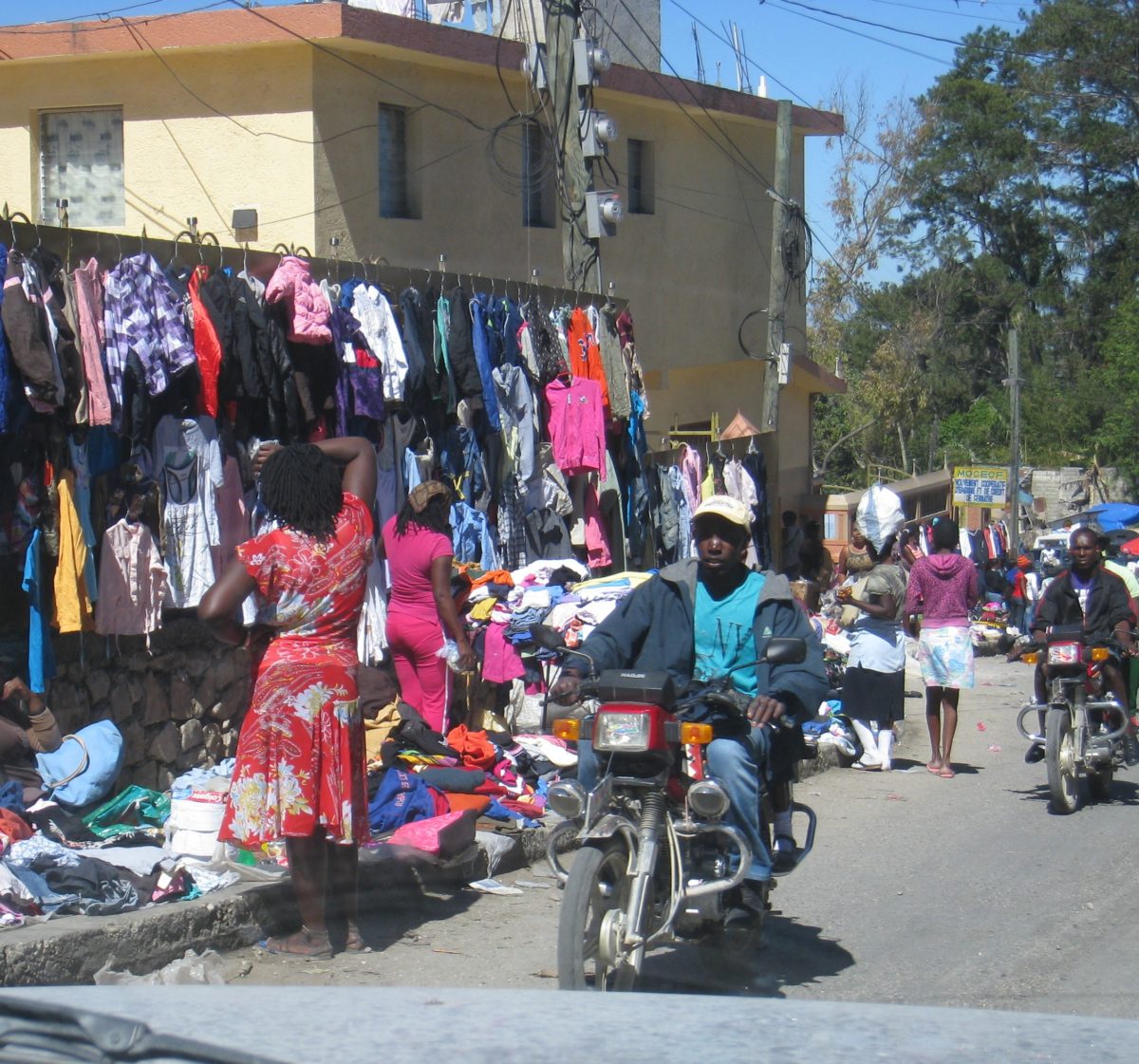
  • Inequality (the growing gap between the haves and have-nots) in our world is one of the biggest issues facing governments today.  Discontent at the way that wealth is distributed has contributed to the decline of empires many times in recorded history.  I observed that gap in a more extreme form on a visit to Haiti in 2015.  The poor live in a prison of abject poverty and the rich live in cages.  Nobody wants that.

I have no illusions that this is simple.  Initiatives of this nature have been tried before (i.e. affirmative action).  But we generally (even the haves among us) acknowledge that we need to do better at addressing the growing divide between haves and have nots in North America.  I’ve never believed that direct government intervention (tax and spend) was the most efficient way to do that because it is managed by a group of people who’s primary objective is to keep their jobs.  Free enterprisers are motivated by profit and that usually means doing things as efficiently as possible.  Applying that kind of drive to solving social problems is, in my opinion, the best way to get things done.  The key is to figure out the best way to leverage that drive.  I think Social Procurement, done well, could be that thing.

Leveraging public procurement to reward the demonstrated power, creativity, and ability of free enterprise to find efficient solutions to solving social challenges would require committed leadership and vision.  The immediate response of some people that I’ve shared this concept with is “the unions are not going to like that” or “how will we get the work done if contractors just walk away?”  No question, those are legitimate concerns and challenges that will need to be addressed.  Addressed by leaders with the vision and courage to find a way forward.  Social Procurement is already “the way we do things around here” in Europe, New Zealand, Australia, and is increasingly being adopted by municipalities in Canada, including the city of Toronto.

I commend the City of Hamilton for embracing this concept and encourage all of us as residents to support this city in transforming how value is defined in taxpayer funded contracts.  The city’s procurement manager is expected to deliver a report on the pilot project to the Audit, Finance, and Administration Committee sometime in November and I intend to be there to encourage the kind of bold leadership that I know will be needed going forward.

Citation: The City of Hamilton’s Social Procurement Framework has been designed by Sandra Hamilton, who  recently won an international PhD scholarship to advance her work at The Manchester Institute of Innovation Research in the UK.

Imagining co-housing alternatives

I’ve written about the social challenges of affordable housing and the potential that, at least for some people, co-housing could provide a solution.  The co-housing concept is becoming more and more a mainstream discussion as I get into conversation with people from all stages of life and occupation.  In my last post I was floating the idea of building something, a condo or townhouse complex that would be suited to a co-housing model.  Since then, I’ve been reminded of a couple of important things that need to be considered.

While social isolation is a challenge among older people, the choice to pack up and move into a smaller unit and new community is not without it’s challenges either.  Home is where the heart is and leaving a neighbourhood and a place that has been home for, in some cases decades, can be very challenging, particularly as we get older.  The other thing that I have been reminded of is that there is a lot of existing capacity in the current stock of housing that could be better used.

Co-housing could be a solution that would allow seniors to remain where they are, minimize the trauma of a change, potentially address a couple of other societal issues like affordability and social isolation, and also address planning issues like intensification.

The housing boom of the past 5 – 10 years has left many seniors in a position of having significant equity in their homes.  Many of those homes have empty space.  It has also left many others struggling to get into an expensive market.

Imagine I am a senior who is living in my large family home alone.  I have raised children who have now moved off on their own, my spouse has passed away.  I love my neighbourhood and don’t want to move but the house is becoming too much. Imagine I could engage a consultant who would come into my house, help me design a space that would be comfortable for me to live in, manage the renovation, and find me someone who would be interested in taking over the rest of the house through a rent-to-own arrangement that would ultimately result in title transfer.  Someone who, like me, would have an appreciation for the community benefits of a co-housing arrangement.

I’m interested in exploring a renovation company or non-profit that would provide full service from assessment/design, to re-zoning, construction management, and lease/rental/rent-to-own agreement services to seniors for whom this model might work. The challenges of this type of solution have been pointed out to me in conversations I’ve had over the past year. Those challenges include finding suitable parties able to make a co-housing arrangement work, financing and title challenges.  But I don’t think any of those are insurmountable if we are willing to give them some real thought.  And the benefits could be significant.

I would like to assemble a focus group made up of a lawyer, financial planner, renovation contractor, city planner, co-housing advocate, and a realtor to work through those challenges.  If you, or someone you know, would be interested in discussing this, please reach out to me by e-mail – ken.tigchelaar@homeandproperty.ca

Real estate becomes real

In a blog that I posted some time ago, I shared that I was working on my registration as a realtor.  This is my announcement that, as of July 4, 2018, I can get out there and begin trading real estate.  So if you are looking for a realtor, or know of someone who is, please consider passing on my contact information.  My cell phone is 905-746-1750 and my e-mail is ken.tigchelaar@homeandproperty.ca .

I’ve had opportunity, as I worked through the real estate courses, to give some thought to where I want to get involved.  There are many directions to take in real estate and the one thing that is pretty clear to me is that there is no way to be an expert in all types and markets.  So I’ve narrowed my focus to Commercial and will likely focus on multi-unit housing.  That’s not to say I can’t sell a house, or a business if that’s what the client needs.  I’ve built a house and done extensive renovating so I do know how a house is put together, and I have operated a small business.  But I am going to be deliberate about building my expertise in Commercial and, specifically, larger housing projects.

My main motivation relates back to the decision to focus on poverty issues in retirement that has gotten further distilled down to affordable housing.  This is a topic that is getting a lot of play in light of the way the housing market has broken so many records over the past 5 years and left many people behind, exacerbating a problem that was already quite acute.  I feel like this area is a good fit for my interests and the skills that I have developed over the years.

I’ve also been thinking about creative ways to make housing more affordable and adaptive to the realities of today’s market.  One of those ideas is co-housing and trying to promote the concept of integrating affordable housing units into a market rent situation by agreeing that individuals will make a contribution to the community as a condition of access to the affordable units.  This scenario would provide younger people (single moms/dads, young couples, students) with an opportunity to access affordable units that are subsidized by seniors, or seniors-to-be, who have capital and a desire to age in place.  In return for the support on housing cost the recipients of that support would volunteer a certain number of hours a month to help out with the chores of life and dealing with the isolation that can often plague seniors who find themselves alone in a big house and want to change their situation.  Chores of life could include vacuuming, gardening (perhaps gardening together in a community garden), getting groceries.  And mitigating isolation could mean time committed to playing games together or preparing and sharing a meal.  The younger people benefit from the wisdom of the elders and support in the cost of housing.  The seniors would benefit from a level of support that might enable them to remain in their situation longer.  They could also have the satisfaction of knowing that a portion of their capital is providing an opportunity for young people to find their way back into the market.

There is lots of flexibility in how such an arrangement could be structured, and I will always be open to creative dialogue, but one of the situations I imagine is a condominium complex that is built with community features such as a common kitchen, community garden etc.  Everyone would have their own space (unit) in a structure that is built in a way that is deliberate about creating community.  Such a complex would include a percentage of units that are subsidized by grant money, investors money, patient capitaI, or any other creative ways of raising capital.  These units could be owned by investors and rented out at affordable rates, or even Rent to Own.  The primary objective would be to create a situation where the generations are helping each other get through life.  Each bringing what they have to contribute.  I would love to discuss this further with anyone that is interested.

Distillation

Once again it has been a number of weeks since my last post and I wonder where the time goes.  It’s almost bewildering.  One of the things I expected when I retired was that I would have all kinds of time to pursue all of my whims, hours well wasted in the garage tinkering with tools, afternoons spent on the streets of Hamilton listening to, and writing the stories I encountered, renovation projects put off far too long that I would be able to finally get to, hours spent wandering the back roads on my motorcycle “livin the dream”.  And on and on.  That has not been the case and I’ve found myself often frustrated.  Not that I haven’t been able to do some of those things but that it seems the list of things I have not done is longer than the list of things I have.
When I take a few minutes to reflect on why it is that I feel more rushed and disorganized now than I did when I was working, a couple of things come to mind.  When I was working I had my job to give me a feeling of validation.  I could justify my existence every day because, well, I was at work.  When that structure was gone it was as if my life had gone off the rails and, without the job to give me a sense of purpose and direction, and the desire to have purpose every bit as strong, I found myself going off in all kinds of directions.  It’s an interesting state to be in and one that requires me to give myself a lot of grace.  Something I’m not particularly good at.

One of the things I thought I would be doing much more of is writing.  I left my job with a head full of things that I wanted to write about and it was as if it all evaporated when I finally had the chance to sit down.  When I look back on the past few months the best way to describe what I have been experiencing is a process of distillation.  I try things and realize that they are not quite what I imagined.  Or maybe fun for a while and the novelty wears off.  And, as is the case in the distillation process, I find that sometimes when the water is boiled off, I’m left with a kernel of something that I can set aside as an area of study or interest I can pursue.  It’s not unlike a crucible where impurities are burned off in order to get to the pure metal.  It’s hard.  Mostly because there are so many distractions along the way and so much uncharted territory to explore that rather than looking for things to do, I find myself overwhelmed by all the things there are to do.  The reason for the gap in blogs is because I never seem to complete a thought so the writing tends to be incoherent at times.

I am trying to get better at is writing in the midst of the mess, so here I go again.  Over the next few weeks I will try and share some of the kernels that have come out of the distillation process.

Poverty and me

poverty-and-meI indicated in my first post that I felt drawn to more involvement with vulnerable people and people caught in poverty. They often tend to be the same people. This blog post is trying to explain a couple of things that have influenced my view on poverty.


One of the things that was clearly evident to me when we were living in Calgary was the disparity between rich and poor. I walked to the office every day (about 20 minutes) to the center of the city and essentially the center of the oil industry in Alberta. No shortage of money there. Along the way I would pass the homeless who would be camped out along 10th St. hoping for a bit of spare change. I wasn’t in the habit of tossing toonies because I don’t see that as a sustainable solution. But I did know where some of the local shelters were so I could direct people to them, and I would take the time to get to know the names and stories of the people I encountered. I learned that there are no simple answers to the challenge of poverty. Even in -30 weather there were some who would choose to sleep on the street rather than take a chance on getting assaulted or robbed in a shelter. Some were paranoid to the point where the only place that felt safe was the street. Mental health issues abound. One guy in particular was a regular on my travel path. When he disappeared for a while I was concerned that something had happened to him but, when he reappeared a few weeks later, he told me that he had gone to stay with his sister. He ended up back on 10th St. because life with his sister “just wasn’t my thing”. The street had become home to him.

Another experience that influenced my view of poverty. In the spring of 2015 we had an opportunity to spend 10 days in Haiti. The disparity between rich and poor there is stark. There are essentially 2 separate economies in that country. I came away from that experience struck by the irony that existed there; the only slave colony to “successfully” revolt. Everyone in current day Haiti was a prisoner. The poor who live in their prison of poverty, and the rich who live in their cages. It was pretty clear to me that that level of disparity is bad for society as a whole. Another thing that was clear to me was the harmful impact that being a net recipient of aid had on the economy and the psyche of a whole country. Poverty is their biggest export is the way one good friend put it to me.
That affirmed for me that, in any circumstance, both rich and poor must be partners in finding solutions. As rich people and countries, we tend to take the easy way out, pouring money into situations without always considering the overall impact. Well meaning, just not well thought out. And I say it’s the easy way out because it is easier than investing the time and effort required to walk alongside people and finding solutions together.

These experiences have shaped my philosophy around the right way to “be the change” when it comes to helping the poor. When Jesus said “from whom much is given, much is expected” He was not talking only about money. We have all been gifted in some way and that includes the poor. In everything I get involved in, I am looking for ways to contribute my gifts, whatever they are. And I’m trying to make it my going-in position to expect the same from all the stakeholders.

Thanks for sharing this journey with me.

Success to Significance

p1000990I’ve been reading a recommended book called From Success to Significance.  It describes a turning point, a shift from focus on career/business success and the practical need to provide for a family etc. to doing something significant.  That is not to suggest that supporting a family or developing a career is not significant.  But, for many of us, the practical reality of those responsibilities meant having to defer the pursuit of passions or interests.  And we all have those passions and interests.


It occurred to me that there have not been many generations (in fact ours may be the first) where individuals can reach a point of economic independence (retirement/business success) and still have capacity (skills, experience, resource) to do something significant with a reduced requirement for the same pay cheque that was needed while working.

So what to do with that residual capacity?  We could spend our remaining years golfing or fishing but, for many of us, that will not be satisfying for the many years that could potentially be left.

The US election highlighted a reality that I have been bemoaning for some time.  There are so few competent leaders.  Among the many characteristics of leaders is to “speak truth, bring hope”.  What I saw in the election campaign was a strong tendency to speak lies, bring fear.  Any substantive policy discussion seemed to be abandoned in favour of the exchange of insults that was often painful to watch.  It was a race to the bottom that looked anything but presidential.  And now we are beginning to see echoes in the Conservative leadership race that are disturbing.

Our generation so badly needs a revival of leadership that is based on the Ultimate Moral Authority, not the relative morality of reality TV.  Perhaps our burden as the generation of Success to Significance, is to be that change, to be the voice of reason in the many contexts within which we find ourselves in leadership roles.  I would be happy to explore what that might look like with anyone who is interested.

Wilderness

img_9306

Figuring out my next role will be a journey. I’ve decided I want to focus on vulnerable and marginalized people in our society and the things I think are interesting are things that resonate with that theme.   I am interested in organizations that are providing leadership in issues that concern the poor, issues like food security, affordable housing, access to education….. all things that are a long way from the world I have spent the past 36 years in.  So there are a lot of times I find myself “out standing in my field”.  Literally, alone, and standing in the middle of nowhere, disconnected from what I’ve known and not connected to anything new yet.  It is humbling to say the least. It was not that long ago that I was the guy sought out for my expertise, respected by my peers (in my mind anyway), and the guy that contractors looked to for direction.  Now I’m the new guy in pretty well every context I’m in and having to start at ground level.  I am, after all, learning about a whole new sector.

So, I soldier on.  My process has been to reach out to people that appear to be doing retirement well and who are engaged in something I think might be interesting.  That process has resulted in a number of great conversations and connections.  It is also opening up a wide world of  unscripted opportunity that can be bewildering.  And, since I don’t have the confines of my job to keep me between the rails, I often find myself reacting to things, a bit like a pinball.  That is personal management that I just need to re-learn.

I am convinced that networking is going to be my best way forward and I take some comfort in the fact that I’m not alone.  There are a lot of us who have reached retirement with a few good miles left.  Hey, maybe there’s an opportunity there………

Be the Change

qtq80-v9gLVUI have been encouraged to begin blogging again so I’m picking up where I left off following the election period of last year. I’m in the midst of a significant life change in that I retired effective July 1 after 36 years in Downstream operations at a major oil company, and have been working through a process to figure out my next career. I’ve put off the blog a bit and spent the summer outside, but it’s time to get to work on figuring out what work looks like for me going forward.
I’m blogging my experience for a couple of reasons. I’m sure I’m not the only person retiring or working through some other life change. Maybe my experience could be helpful to someone else. I’m sure to benefit from anyone who happens to read this and has something to share. And writing it out helps me to sift through it in my head.
So, here goes. I’ve made the conscious decision to put off getting into another role in the industry that has been home to me for all of my working life. I want to be very deliberate about exploring my interests and finding a direction that “lights me up”. That means I will likely be all over the map for the next little while.
The process of evaluating my vote highlighted a couple of things for me. It ignited a smoldering interest in politics and leadership and reminded me that our moral obligation to care for the poor of our world is not limited to me or my church. It is the responsibility of all of us. It has also impressed on me the importance of the fact that politics is more about investing long term in the relationship, not just checking in for a few minutes every election cycle. So I will be exploring poverty, economics, politics, church politics, interfaith relationships …….. I need to get to work.
“You must be the change that you wish to see in the world”. It’s a quote that is attributed to Mahatma Ghandi and a line that resonates with me. One of the things that struck me during the election was the fact that politicians are not able to make effective change in isolation. We are all leaders to some degree. We all have a sphere of influence and we need to be mindful every day of the impact that influence has.
I want to figure out what my role is and where my heart and the whispers I hear from the Spirit will lead me. And I hope I will be able to keep it engaging enough to make it valuable to others as well.